All Categories
Featured
Table of Contents
Low-code and no-code platforms excel at assisting non-technical teams prototype quickly or build basic internal tools. Complicated system integrations, heavy security architectures, and core proprietary software application still require skilled designers to make sure stability and security.
How long does a typical digital change require to yield quantifiable ROI? Digital change is a continuous journey, but initial stages usually yield quantifiable returns within 3 to 6 months. By prioritizing high-impact, low-complexity workflows for early automation, services can fund longer-term modernization efforts using the savings generated in advance.
Enterprise technology patterns in 2026 show a wider shift from experimentation to structured execution. Organizations have tested generative AI, broadened automation initiatives, and reassessed legacy systems. Now the focus is sharper: governed AI deployment, quantifiable automation results, and modernization techniques that support long-lasting resilience. The following patterns highlight where enterprise investment is accelerating and where leadership focus is magnifying.
At the exact same time, industry findings emphasize that without disciplined data and governance practices, numerous AI efforts risk failing to provide measurable business value. While analyst point of views highlight different dimensions of the market, they indicate a typical reality: AI needs to be structured, automation should be orchestrated, and enterprise architecture must support scalability, governance, and trust.
Throughout managed markets and document-intensive environments, these trends are currently improving business architecture choices.
Building Smart Systems for Future Scale
The speed of modification going into 2026 is speeding up, with enterprise innovation shifting from incremental upgrades to transformational abilities. Organisations that invest early in these emerging trends will protect a measurable one-upmanship throughout efficiency, innovation, and client experience. The following ten developments are set to specify the year ahead, improving how companies run, provide services, and contend in a progressively digital market.
Unlike conventional generative tools that depend on human triggers, agentic systems carry out jobs end-to-end: preparing goals, taking self-governing actions, and incorporating with enterprise applications to provide quantifiable outputs. They act less like assistants and more like digital team members. This shift will transform how organisations approach labour-intensive jobs such as information event, compliance reporting, procurement workflows, customer case handling, and systems administration.
Strategic Roadmaps for Managing Global InnovationEarly adopters will be those looking for fast scalability, tight cost control, and much faster decision cycles. But there's an argument to state this ship has already sailed The start of 2027 marks the true end of ISDN across the UK, forcing the last remaining businesses to switch in 2026. While the due date has actually been announced for several years, thousands of SMEs have actually delayed action.
Evaluating Traditional R&D vs. Agile Innovation Cycles
The winners will be organisations that treat this shift not as a technical replacement, however as an opportunity to modernise call routing, hybrid-working support, CRM combination, customer insight, and contact centre capability. Suppliers will separate through bundled analytics, call automation, and security features created for hybrid networks. Attack methods are now progressing faster than human experts can react.
Security platforms will keep an eye on endpoints, identity systems, cloud environments, and OT networks constantly, acting immediately on emerging dangers. This move will accompany a rise in consolidated security stacks, where MDR, SIEM, identity protection, and endpoint controls operate under a single intelligent framework. Organizations will progressively determine their security posture through durability metrics rather than legacy compliance alone.
As services end up being more depending on dispersed networks of providers, logistics partners, and digital platforms, vulnerabilities anywhere in the chain can weaken client self-confidence and industrial efficiency. In 2026, organisations will prioritise provider verification, real-time visibility of third-party dangers, and completely auditable data flows across their procurement and logistics ecosystems.
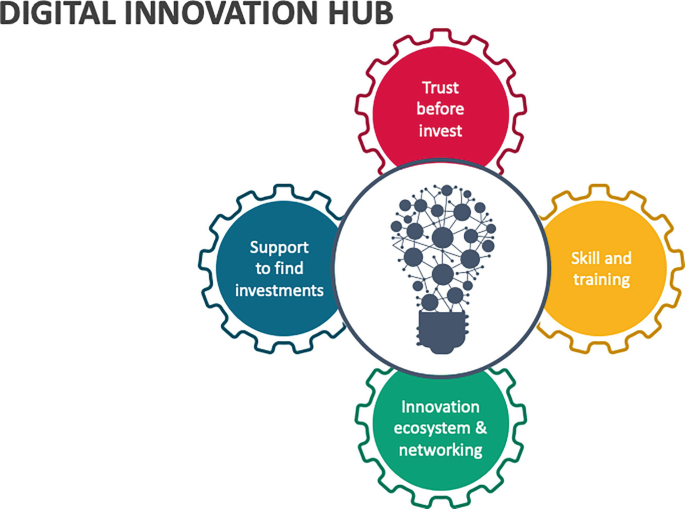
Strategic Operational Guide for Operating LabsMaximizing ROI through Smart Innovation Hubs
Merchants and business operators that can show end-to-end supply chain security will differ in a significantly scrutinised market. As AI continues to develop, organizations are starting to question the long-standing presumption that expert tasks need to be contracted out. In 2026, advanced models trained on sector-specific workflows will provide organisations the capability to bring previously externalised functions back in-house, at scale and at a portion of the traditional cost.
Logistics operators will use AI to orchestrate preparation and optimisation without relying on outsourced consultancies. This shift allows organisations to keep strategic control, speed up turn-around times, and reduce spend on external contractors.
Makers, energies, and logistics providers are moving far from isolated functional networks. In 2026, OT and IT stand to completely assemble, allowing maker data, upkeep records, energy use, and production control systems to merge with ERP and analytics platforms. This convergence will produce: Predictive maintenance prioritised by industrial impact Real-time production and expense visibility Stronger governance across traditionally unsecured OT gadgets Organisations that incorporate early will decrease downtime and totally free trapped worth in their operational data.

Latest Posts
Agile and Distributed Cloud Architectures
Evolution of Enterprise R&D for 2026
Optimizing Cloud Architectures in Modern Systems