All Categories
Featured
Table of Contents
Digital improvement is a tactical restructuring of an organization constructed on innovation, including procedures, culture, consumer experience, and governance models. This term has been utilized thoroughly in presentations, tenders, and technique sessions over recent years, it ultimately comes down to an extremely concrete concern: can a business rapidly change the method it runs when the market, customer behavior, or brand-new technologies demand it? It is necessary not to confuse transformation with automation they are not the exact same.
Replacing paper applications with an online type, presenting a chatbot rather of a call center, or executing a CRM so managers no longer track clients in notebooks. Change is a much more essential process. It is not almost implementing a CRM, however about moving to a fully transparent sales design.
Not simply launching a client app, however producing a brand-new sales channel that is individualized in genuine time. To put it simply, we are speaking about altering the internal logic of business when a business moves far from running by inertia and starts making decisions based on data. In 2026, company owner no longer need to be persuaded of the importance of digital modification.
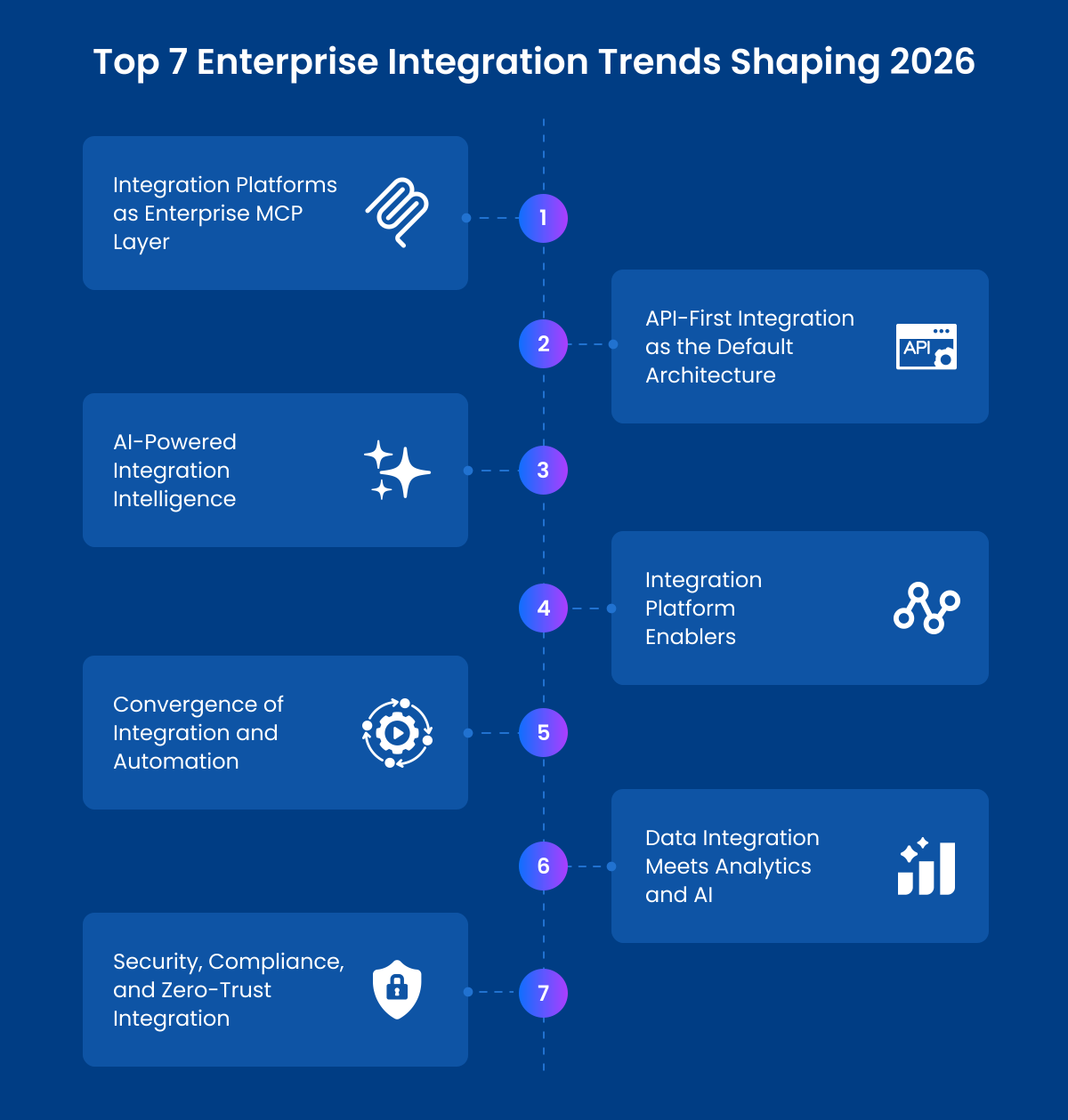
A Comprehensive 2026 Enterprise Transformation Roadmap
Markets alter in months, not years. Business that understand the worth of digital transformation now run with self-confidence without excessive approvals, without manual control, without spaces between marketing and operations.
Others, meanwhile, hang around on limitless conversations, looking for the right data in Excel spreadsheets, and as an outcome stop working to make quick and reliable strategic decisions. The real benefit of improvement is not fashionable tools, but the clearness it brings finally seeing what is happening inside business and understanding how to affect it.
Installing new software is like changing the stage set in a theater and anticipating the performance to improve. Digital improvement is far broader: the script should be reworded, functions rethought, and actors re-trained to carry out in a different way. And all of this takes place not throughout practice session breaks, but live, throughout the performance itself.
Only when all of them work in alignment does transformation stop appearing like yet another technical task and begin providing genuine service impact. It is at the crossway of these elements that digital change trends emerge determining who sets the rate and becomes the primary character, and who stays in the audience.
It specifies the speed of modification, the dependability of procedures, and the ability to scale without interruptions. Modular IT architecture that is easily versatile and does not interrupt business operations with every upgrade.
Mapping the Enterprise Tech Ecosystem of 2026Future Tech Research Cycles and Modern Strategy
Company procedures are the functional logic of a company. If they are disorderly, even the finest system will not be able to make the work effective.
That launching a new product takes 3 weeks instead of six months. That customers do not wait a day for an action, however receive it within minutes.
Without a change in mindset, improvement does not work. Organizational culture must support improvement.
Digital change makes no sense if the customer does not feel it. Technically, whatever may look perfect: new systems implemented, procedures automated, polished dashboards in place. However if the customer still waits 2 days for order confirmation, gets puzzled by payment alternatives, or has to contact us to get a basic answer, this is poor change.
Optimizing Hybrid Computing in Enterprise Systems
Customer experience is an end-to-end reasoning: from the very first click the site to post-purchase assistance. Transformation should link these touchpoints into a single, constant system, where each action is a sensible extension of the previous one. The client does not assess improvement itself, however convenience, speed, and a sense of control.

Latest Posts
Agile and Distributed Cloud Architectures
Evolution of Enterprise R&D for 2026
Optimizing Cloud Architectures in Modern Systems